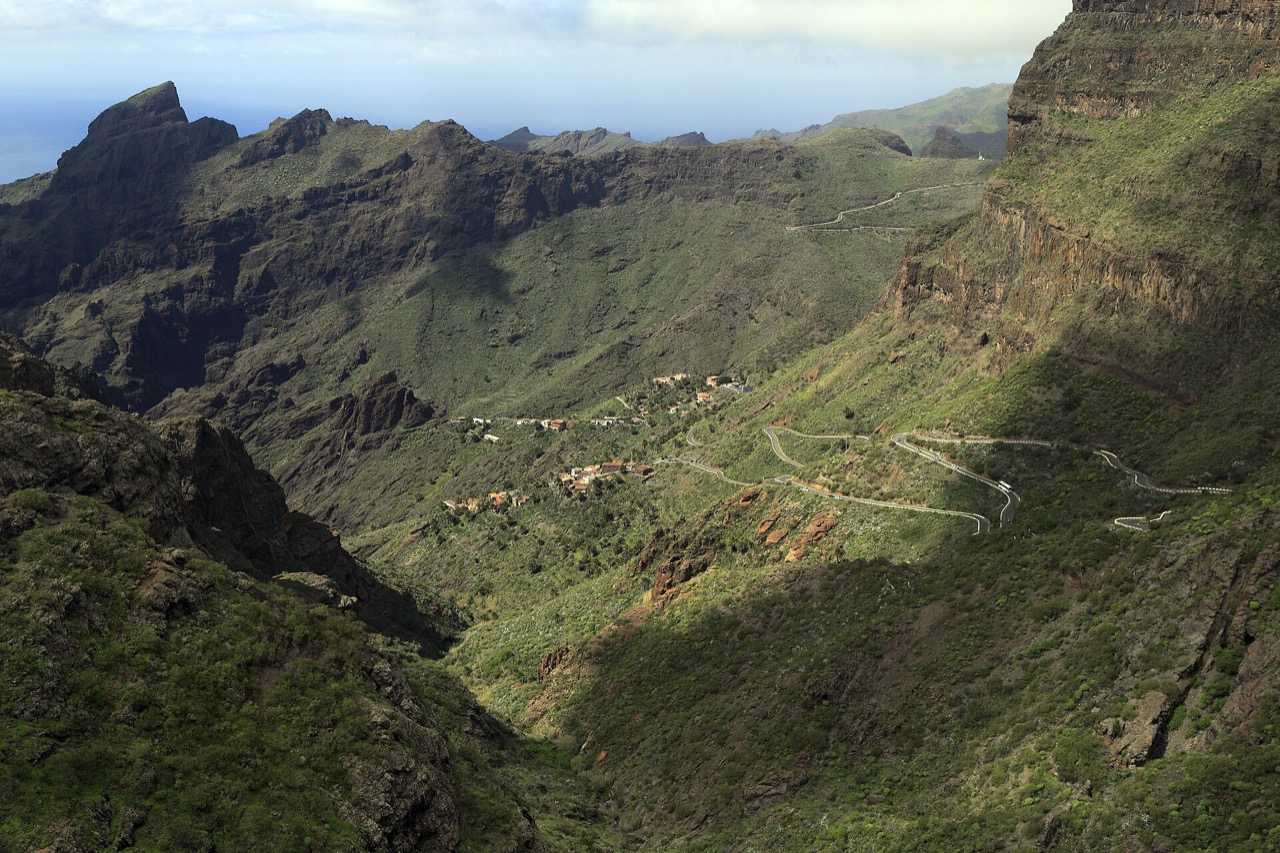
Masca is a tiny hamlet perched above a ravine in the Teno Massif, in the north-western tip of Tenerife. Administratively it belongs to the municipality of Buenavista del Norte, not Santiago del Teide, but the usual access route and much of its tourist logistics run through here, along the TF-436 road out of our municipality. This is the central guide to Masca: what it is, its history, how to get there and which plan to choose. For booking and transport for the ravine, the practical guide has the full detail. Checked on 17 September 2026.
Quick facts about Masca
Population
86 residents in 2020, according to the municipal register; down from 129 in 2000.
Municipality
Buenavista del Norte, 17.5 km from its town centre. The usual tourist access is from Santiago del Teide.
Altitude
Around 600-650 metres depending on the source, on the slope of the Teno Massif.
Protection
Historic Ensemble (Bien de Interés Cultural), within the Teno Rural Park.
A hamlet isolated for centuries
«Masca» is a place name of Guanche origin — it appears in old documents as Mascan, Maxcan or Amasqua — though its exact meaning is not firmly established. For centuries, the only connection to the rest of the island was the so-called Camino de los Guanches, on foot or by donkey to Santiago del Teide; the road now known as the TF-436 arrived much later, with no precise official date for its opening. That isolation fed a tradition often repeated in tourist guides — that Masca served as a hideout for pirates and smugglers — but it is a legend with no documentary backing: Wikipedia itself flags it as «citation needed». In 2007 a fire destroyed homes and vegetation in the area, a reminder that this remains an inhabited, vulnerable place, not a film set.
The hamlet and its architecture
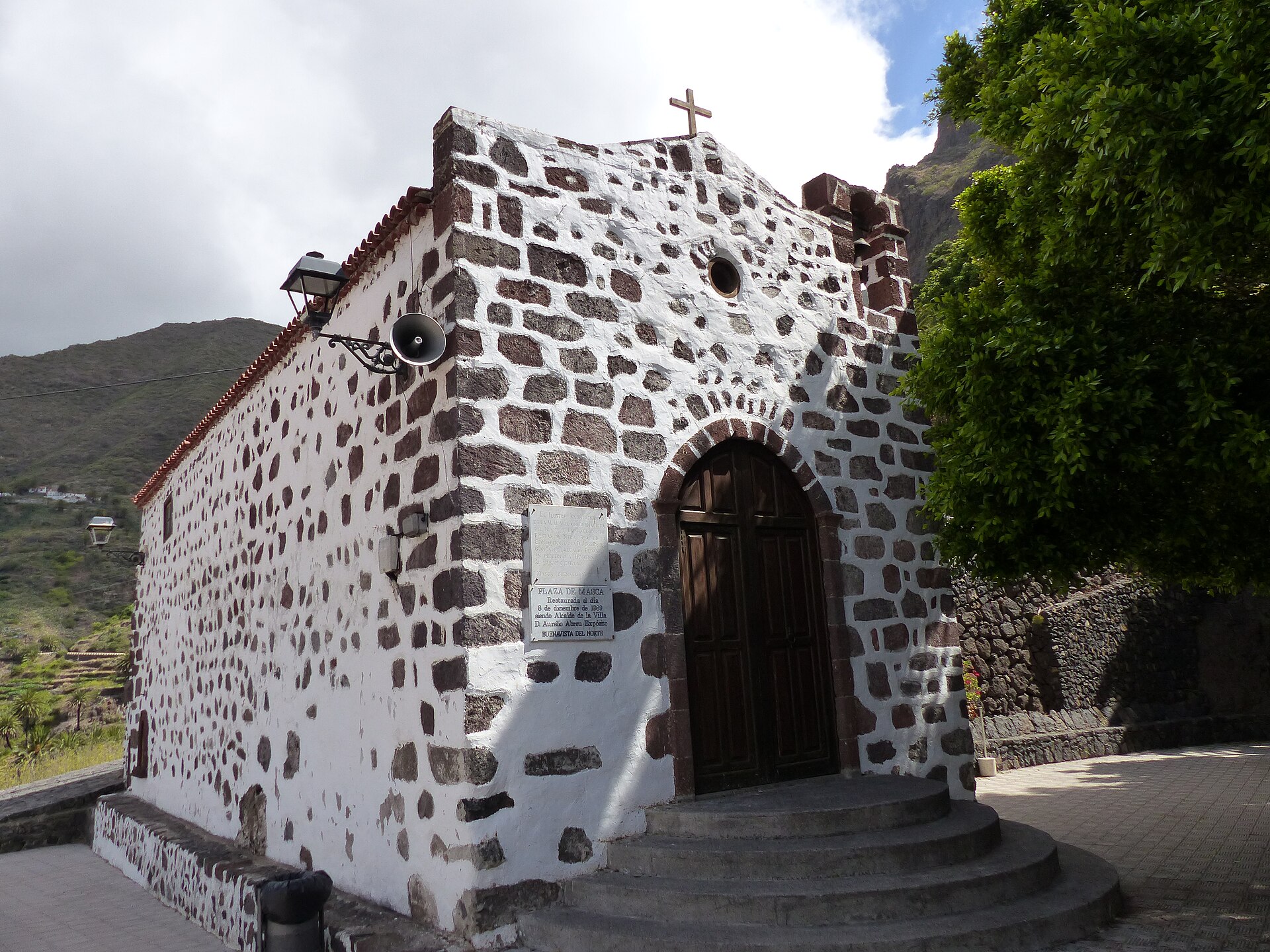
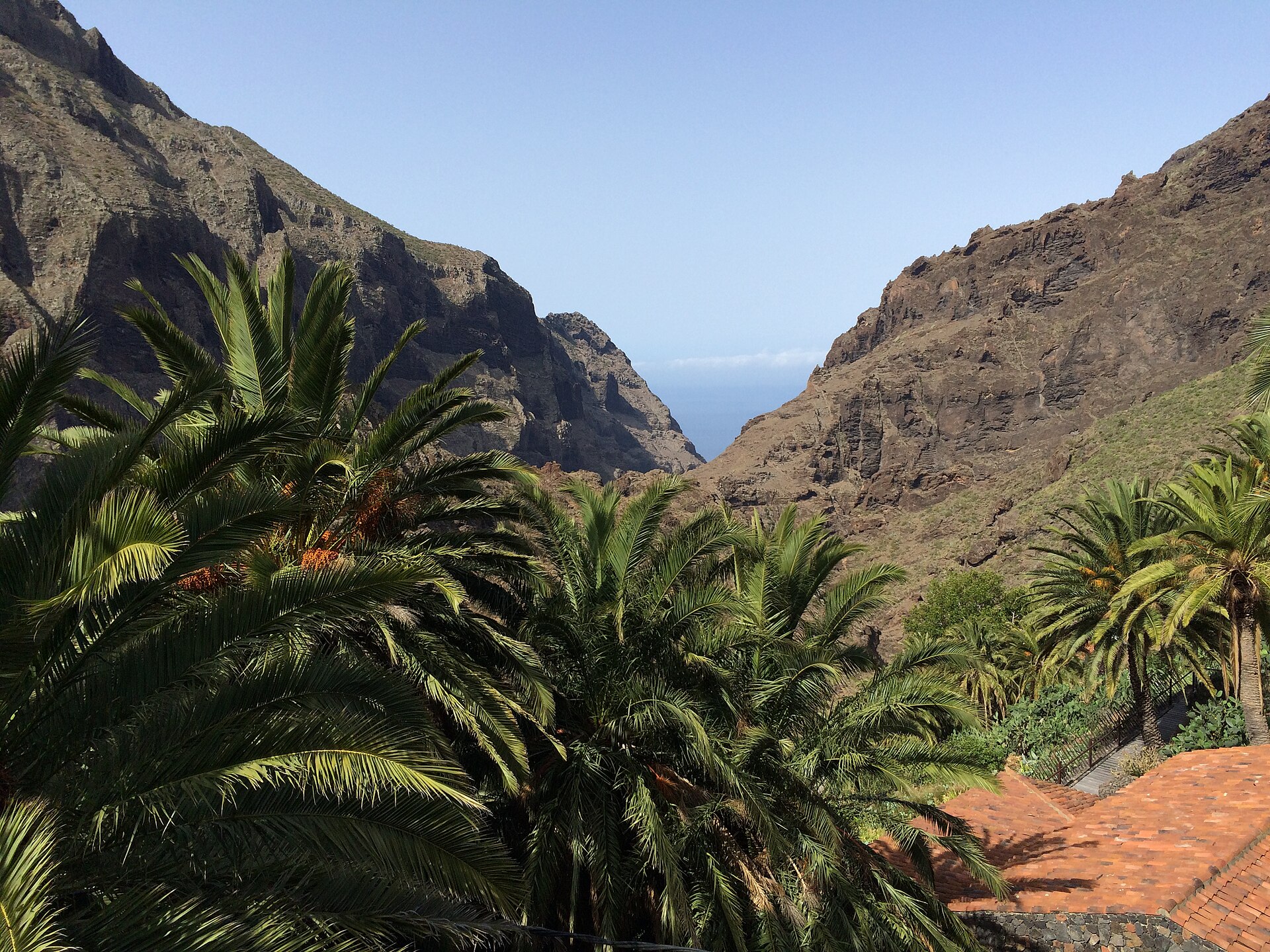
Masca is spread across four traditional hamlets — La Bica, El Turrón, La Piedra (or Lomo del Medio) and Lomo de Masca — with houses of volcanic stone, Canary pine, cane and clay adapted to narrow ridges and steep slopes. According to Turismo de Tenerife, it preserves one of the best-kept examples of rural architecture in the Canaries. On La Piedra’s square stands the hermitage of Nuestra Señora de la Inmaculada Concepción, dating from the 18th century and restored in 1989, next to a large Indian laurel tree. Nearby is an archaeological site with aboriginal rock engravings. The ravine that gives the trail its name, carved over millions of years, exposes some of the oldest rock in Tenerife.
Three different plans: hamlet, ravine and beach
«Masca» can mean three very different things, and it is worth telling them apart before planning your visit. The hamlet is free and needs no booking: a half-day walk around the village and its viewpoints, suitable for almost any age. The ravine is a regulated mountain activity, with compulsory booking, a daily quota, footwear checked at the access control point and a compulsory boat departure: it cannot be improvised on the day. Playa de Masca beach is a third, different thing: a cove reachable only by boat or kayak from the sea, with no walking route from either the hamlet or the ravine. If you’re torn between the hamlet and the ravine, our guide Masca: hike the ravine or just see the hamlet? compares them step by step; for the cove, see the Playa de Masca listing.
Viewpoints and what to see without hiking the ravine
The Mirador de Cherfe, on the TF-436, offers a panorama that on clear days reaches Mount Teide, Chinyero, the whole valley and the hamlet itself perched over the ravine. About 2 km further on, towards Buenavista del Norte, the Cruz de Hilda viewpoint looks over the terraces and the head of the ravine from another angle. Both are roadside stops: simply pull over where it is permitted, with no need to book the regulated trail.
Getting there: car or bus
Masca is reached via the TF-436 from Santiago del Teide, a narrow mountain road with tight bends. Parking in the hamlet itself is very limited and fills up quickly, especially in high season; arriving early makes a real difference. Titsa bus line 355 connects Santiago del Teide with Masca and avoids both the road and the search for parking — and if you’re hiking the ravine, this bus ticket is also one of the documents checked at the access control point. Our guide Masca: car or bus? covers this in more detail depending on your plan.
How much time to allow
For the hamlet and its viewpoints, half a day is enough: two or three hours on foot around the village, plus travel time from the coast. If you’re hiking the ravine, allow a full day: booking, travel, the roughly four-hour descent and the boat departure fill the whole day. Combining both plans on the same day is possible but demanding; most visitors choose one or the other.
Climate and the best time to go
Masca sits on the windward side of northern Tenerife, fully exposed to the trade winds. This pattern, typical of the northern midlands between 500 and 700 metres, brings more humidity, frequent cloud and up to 800-1,000 mm of rain a year, against 150-200 mm in the south of the island. The result is the characteristic sea of clouds: it can be sunny in Los Gigantes and overcast in Masca on the same day.
Clear mornings tend to be more common than clear afternoons, so early morning is the best time twice over: better skies and parking still available in the hamlet.
Masca within the Teno Massif and Rural Park
The Teno Massif is one of the three volcanic edifices that gave rise to Tenerife, reaching altitudes of up to 1,300 metres, and is now protected as the Teno Rural Park. Masca is its best-known gateway from the south of the island, though the massif extends much further, all the way to Buenavista del Norte and Punta de Teno.
Where to eat and stay
Options within the hamlet itself are very limited: a handful of bars and restaurants around the square, with no verified list of hours we can offer here. For accommodation, it is usual to base yourself in Santiago del Teide, Los Gigantes or Puerto de Santiago and drive up to Masca for a half-day trip. Check our restaurant and accommodation directories for the municipality.
How to visit the ravine Ravine or just the hamlet? Car or bus? Playa de Masca
Frequently asked questions
Which municipality does Masca belong to?
Buenavista del Norte, not Santiago del Teide. The usual access route and much of the tourist logistics run through our municipality, which is why it features in this guide.
Are the hamlet, the ravine and Playa de Masca the same thing?
No, they are three different plans. The hamlet is free with no booking; the ravine is a regulated activity with booking and a daily quota; the beach is reached only by boat or kayak, with no walking route. Compare the hamlet and the ravine in this guide.
How much time do I need to see Masca?
Half a day for the hamlet and its viewpoints. If you also hike the ravine, allow a full day, between the booking, the travel and the boat departure.
Is it better to go by car or by bus?
It depends on your plan: if you’re hiking the ravine, the 355 bus is almost essential because the ticket is checked at the access control point. If you’re only visiting the hamlet, a car works if you arrive early. Our car or bus guide explains this in more detail.
Why is Masca often cloudy?
Because of its windward position, exposed to the northern trade winds, which generate cloud cover and a characteristic sea of clouds over the midlands. It can be sunny on the coast and overcast in Masca on the same day; mornings tend to clear more than afternoons.
Is it true it was a pirate hideout?
It’s a tradition often repeated in tourist guides, but with no confirmed documentary backing. What is documented is its historical isolation, connected only by paths well into the 20th century.
Cherfe or Cruz de Hilda, which viewpoint is better?
Cherfe offers the widest panorama, with Teide and Chinyero in the background. Cruz de Hilda, about 2 km further towards Buenavista, shows the terraces and the head of the ravine better. If you only stop at one, Cherfe is the more complete option.