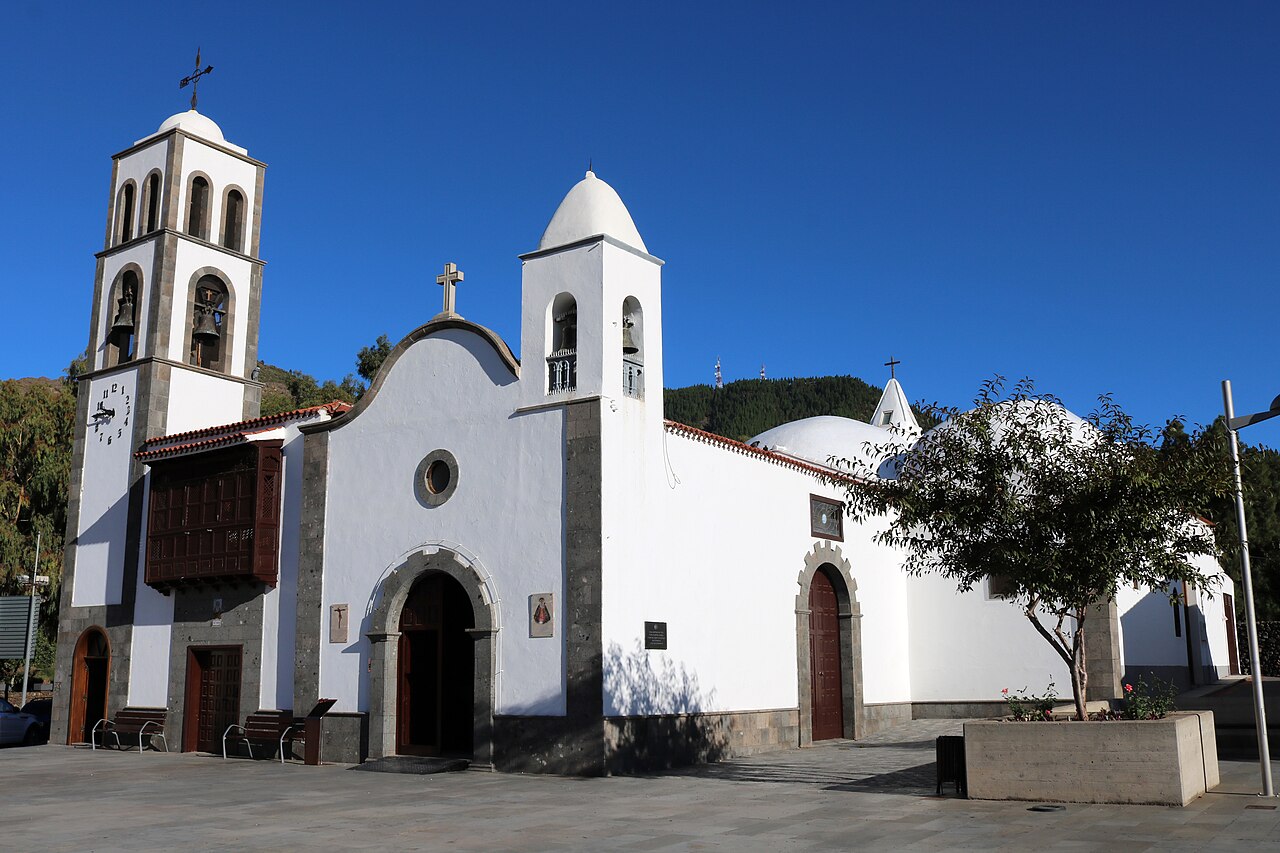
The old town of Santiago del Teide is the inland face of the municipality: a mid-altitude village at 930 metres, with over five centuries of history, the Iglesia de San Fernando Rey as its visual landmark, and direct access to the volcanic landscape of the Chinyero and the almond blossom season. Away from the pace of the coast, this is village life. Checked on 16 September 2026.
Quick facts about the old town
Location
Inland midlands, between the Teno Massif and the Chinyero, at 930 metres.
Origin
Valle de Santiago, documented after the conquest of Tenerife (1496); established as a place around 1508.
Current name
Santiago del Teide since 2 July 1916.
Main heritage
The Iglesia de San Fernando Rey and Casa del Patio, both on Avenida de la Iglesia.
Tourist office
Avda. de la Iglesia, Monday to Friday, 7:30 am to 3 pm.
Volcano
The Chinyero, home to Tenerife island’s most recent eruption, in 1909.
A village with over five centuries of history
The old town’s origin goes back to Valle de Santiago, a place name documented after the Castilian conquest of Tenerife in 1496 and established as a place around 1508. On 2 July 1916 it adopted the name Santiago del Teide, to avoid postal confusion with Playa de Santiago, on La Gomera. Road access did not arrive until 1930, and tourism did not transform its economy until the 1960s: for centuries this was, above all, a rain-fed farming village of the midlands, built around almond cultivation.
The Iglesia de San Fernando Rey, heart of the old town
The square centres on the Iglesia de San Fernando Rey, its hemispherical dome visible from much of the village. In 1676 bishop Bartolomé García Jiménez raised the need for an independent parish for the valley; Fernando del Hoyo Solórzano, lord of the Valle de Santiago, built the new church incorporating the older Santiago chapel, and the parish was established on 9 September 1679. It holds 18th-century religious figures: see the Iglesia de San Fernando Rey listing for more detail.
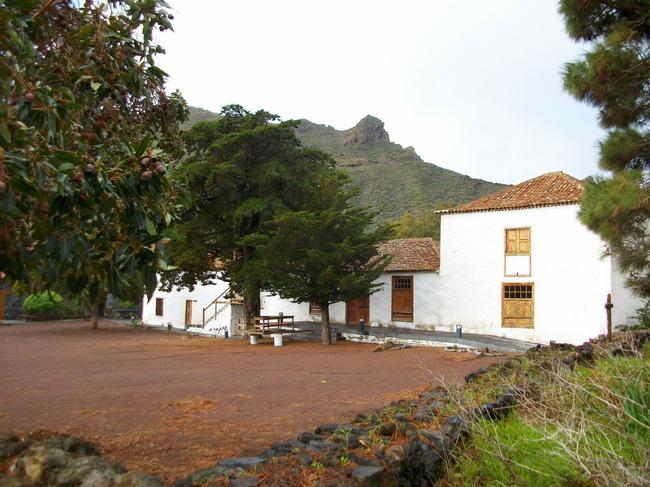
The square and the heritage around it
On the same Avenida de la Iglesia, Casa del Patio is the other great witness to the valley’s manorial past: a complex built in 1665-1668 as the residence of the lord of the valley, with a house, courtyards, wine presses and granaries. Part of it is now private, used as rural accommodation, so the visit is limited to the exterior; see the Casa del Patio listing. The village itself — narrow streets, stone-and-tile houses — keeps a mid-altitude village character that much of the coast has already lost.
Almond trees: the old town’s other landscape
Between January and February, the area around the old town fills with almond blossom, the phenomenon behind the Almond Blossom Campaign. The 2026 edition, the 29th, scheduled activities between 24 January and 22 February: routes through the almond groves, markets, music and a food route. See our almond blossom route guide and the Almond Blossom Campaign listing for the exact dates of each edition, since they change every year.
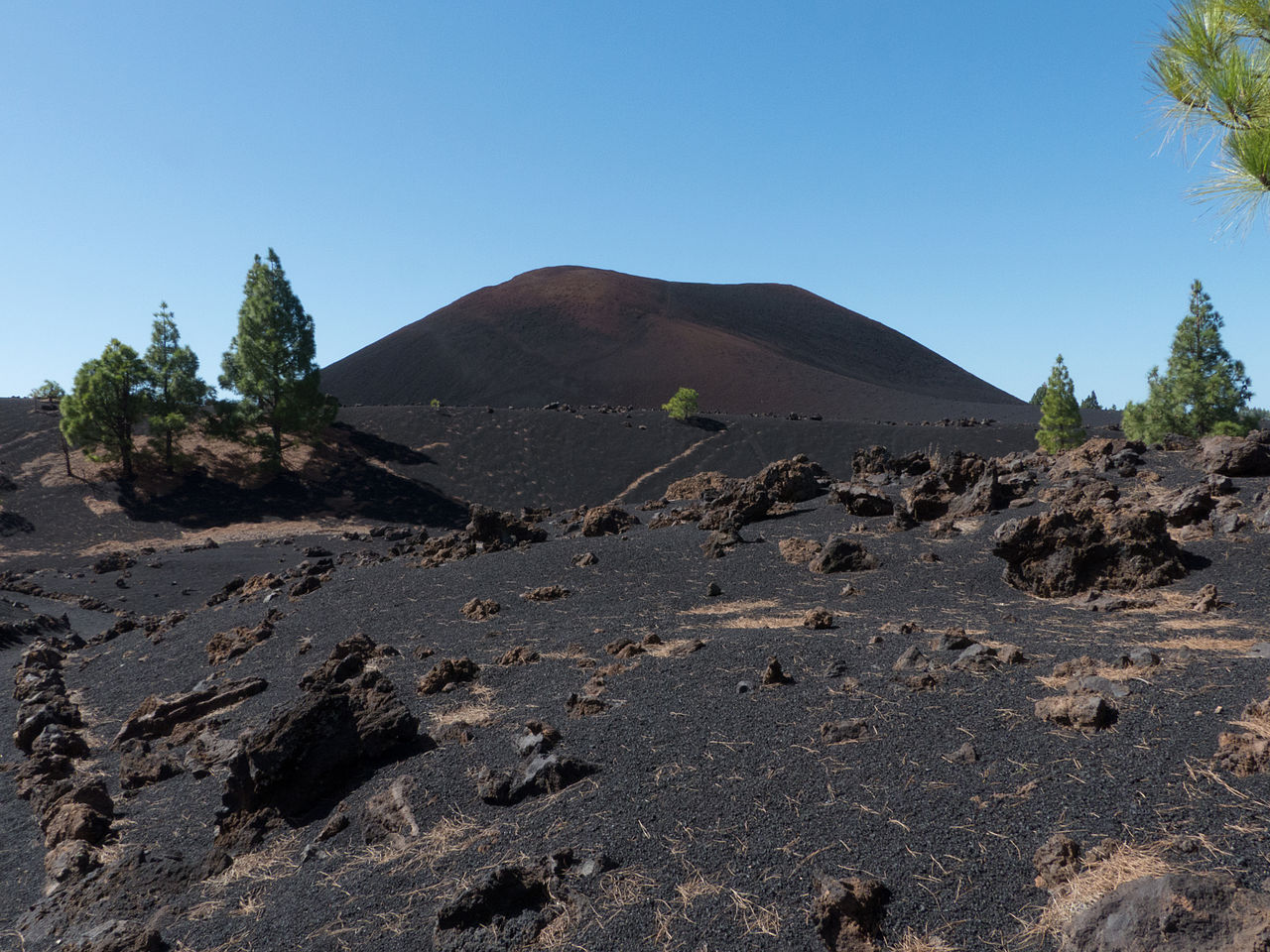
Volcanic landscape: the Chinyero
The other landscape that defines the old town is volcanic. The Chinyero, within the municipal boundary, was the site in 1909 of Tenerife island’s most recent eruption to date, burying pine forest under lava flows. Today that terrain of black lapilli and young pines is one of the municipality’s most recognisable features, and protects its own nature reserve, the Reserva Natural Especial del Chinyero.
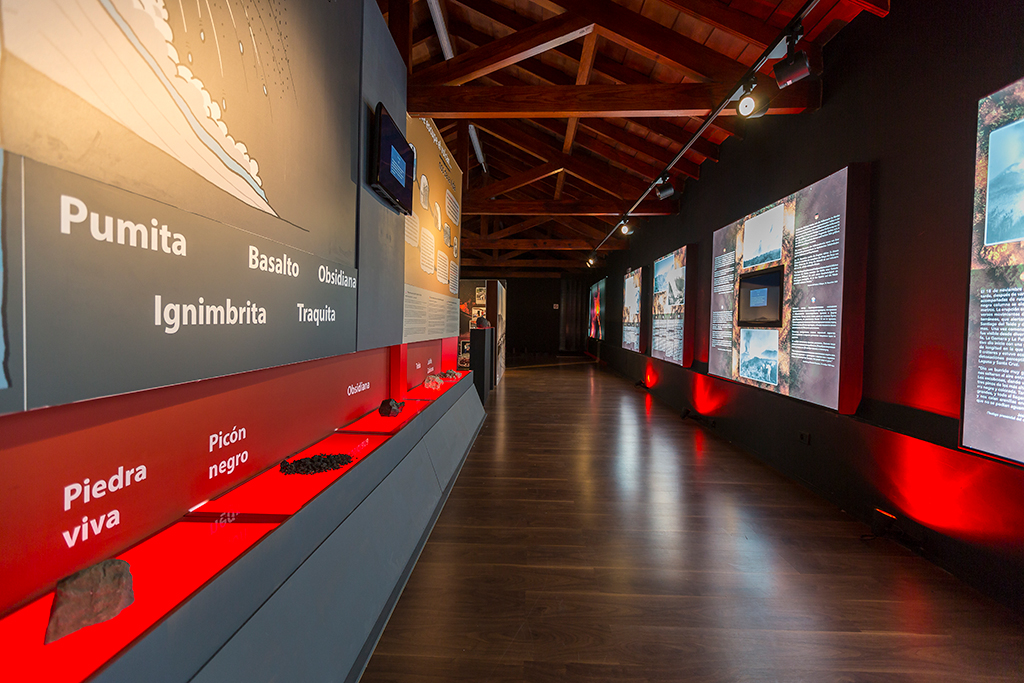
The Chinyero Visitor Centre
Before heading to the volcano, it is worth stopping at the Chinyero Visitor Centre, which explains the 1909 eruption and sets it within the wider volcanology of Tenerife. The municipal tourism website states the centre is temporarily closed for improvements to its electrical installation: confirm it has reopened on the centre’s listing before planning the trip.
What to see on foot, and routes starting from the old town
Without a car, the old town itself is good for a walk of an hour or more: the church, the exterior of Casa del Patio and the streets around Avenida de la Iglesia. To walk further, the PR-TF 43.3, a circular route around the Chinyero, starts nearby; the PR-TF 65.4 Valle de Arriba – Arguayo trail links the old town with other rural villages. See the routes by area listing for more options.
See the Chinyero Almond blossom See routes
Where to eat and where to park
The old town’s dining options are modest: a handful of bars and local hospitality businesses, with no verified list of hours we can confidently offer here. Check the full restaurant directory for the municipality, or combine the visit with a meal in Los Gigantes or Puerto de Santiago, 14 km away. For parking, there is no signposted paid municipal car park: the usual approach is the street, near Avenida de la Iglesia; during the Almond Blossom Campaign, arrive with time to spare.
Old town vs. coast
The municipality has 12,582 residents (2025), but most live along the coast: Puerto de Santiago and Los Gigantes concentrate population and tourist supply. The old town, at 930 metres and 14 km from the coast, is much smaller and quieter. It is reached via the TF-375 and the TF-436, with bus connections from several points; see our guide on how to get to Santiago del Teide for lines and timetables.
A half-day itinerary around the old town
Start with the church and the square
Visit the Iglesia de San Fernando Rey, the exterior of Casa del Patio, and walk along Avenida de la Iglesia.
Head up to the Chinyero
Drive up to the volcano in a few minutes and walk a stretch of the PR-TF 43.3 if time allows.
Decide where to eat
Local options are limited: weigh eating in the old town itself against driving down to Los Gigantes or Puerto de Santiago, 14 km away.
Close with almond blossom or the midlands
In season (January-February), spend the afternoon walking through the almond groves; the rest of the year, combine it with another midlands route or head down to the coast for sunset.
Frequently asked questions
What can you see in the old town of Santiago del Teide?
The Iglesia de San Fernando Rey (1679), Casa del Patio, the volcanic landscape of the Chinyero and, between January and February, the almond blossom.
Why is it called Santiago del Teide and not Valle de Santiago?
The municipality was called Valle de Santiago until 2 July 1916, when it adopted its current name to avoid postal confusion with Playa de Santiago, on La Gomera.
Is the Chinyero Visitor Centre open?
The municipal tourism website lists it as temporarily closed for improvements to its electrical installation. Confirm it has reopened before planning your visit.
When is the almond blossom campaign?
It changes every year depending on flowering; the 2026 edition, the 29th, scheduled activities from 24 January to 22 February.
Do I need a car to visit the old town?
It is advisable: it lies inland, about 14 km from the coast. There is a bus connection from several points in the municipality, but with lower frequency than on the coast.