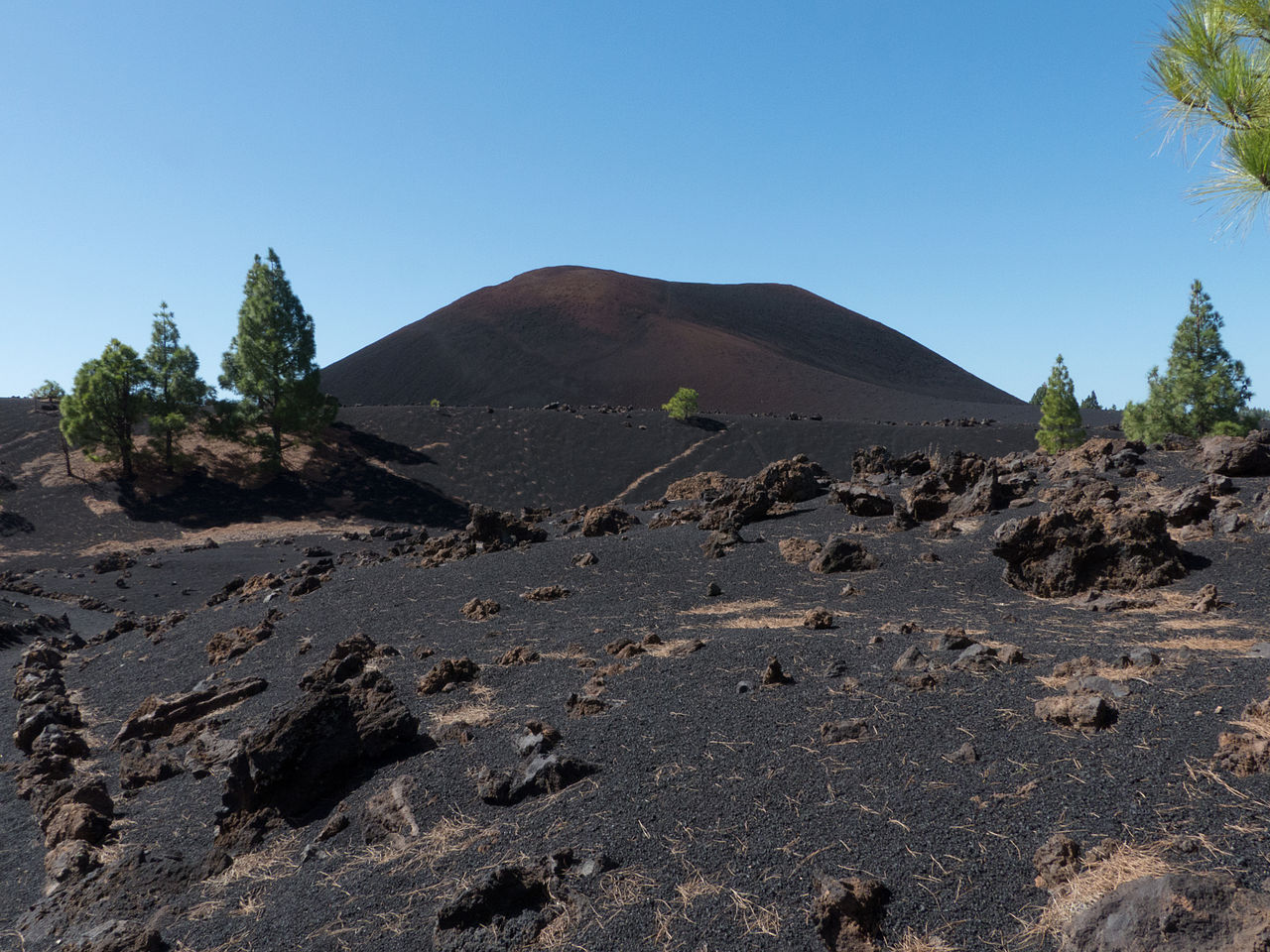
The Chinyero is Tenerife’s youngest volcano: it erupted in 1909, and its landscape of lava and pine forest is still, more than a century on, one of the most recognisable features of Santiago del Teide. Today it is a protected Special Nature Reserve, with hiking trails, a visitor centre and the village of Las Manchas at its foot. Checked on 16 September 2026.
Quick facts about the Chinyero
Location
Santiago del Teide, El Tanque and Garachico; the reserve spans all three municipalities.
Altitude
1,561 metres; the reserve ranges from 565 to 1,561 metres.
Most recent eruption
1909, the most recent on the island of Tenerife to date.
Protection
Special Nature Reserve since 1987, covering 2,379.4 hectares with 14 volcanic cones.
Vegetation
Mostly Canary pine forest, with broom and thyme-like scrub underneath.
Visitor Centre
Temporarily closed for improvements to its electrical installation.
The 1909 eruption
The Chinyero erupted on 18 November 1909 and stayed active for around nine days, into late November: it is the most recent eruption recorded on the island of Tenerife. It formed a volcanic cone some 80 metres high and buried much of the area’s pine forest under lava. No deaths are recorded, though residents evacuated at-risk areas as the flow advanced. Local tradition holds that the image of Santa Ana, carried in procession from Tamaimo, stopped the lava at the spot now known as El Calvario de Las Manchas; the council commemorates the episode every November with a procession to that same calvary.
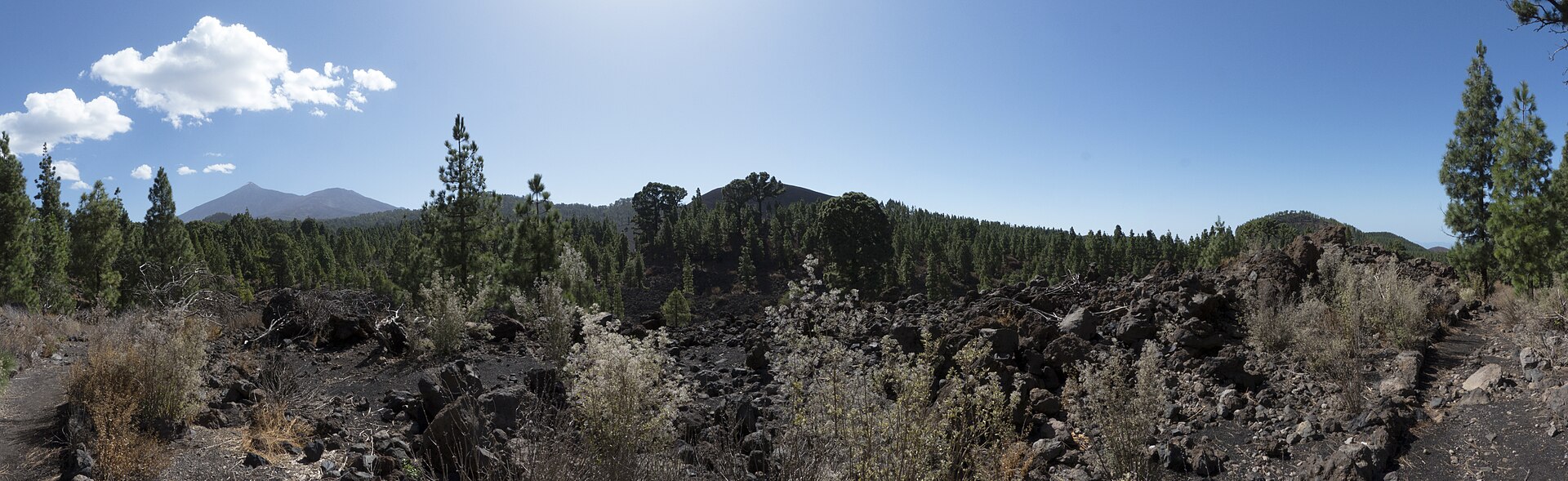
Volcanic landscape and the Chinyero Special Nature Reserve
The Chinyero Special Nature Reserve protects 2,379.4 hectares across Santiago del Teide, El Tanque and Garachico, with 14 volcanic cones from the most recent sector of the Abeque ridge. It has been protected since the 1987 Canary Islands Nature Areas Law, now consolidated in the 2000 text, and is also a Special Protection Area for birds. The landscape combines lava flows, Canary pine forest and a recreation area, Arenas Negras, with picnic tables, benches and toilets.
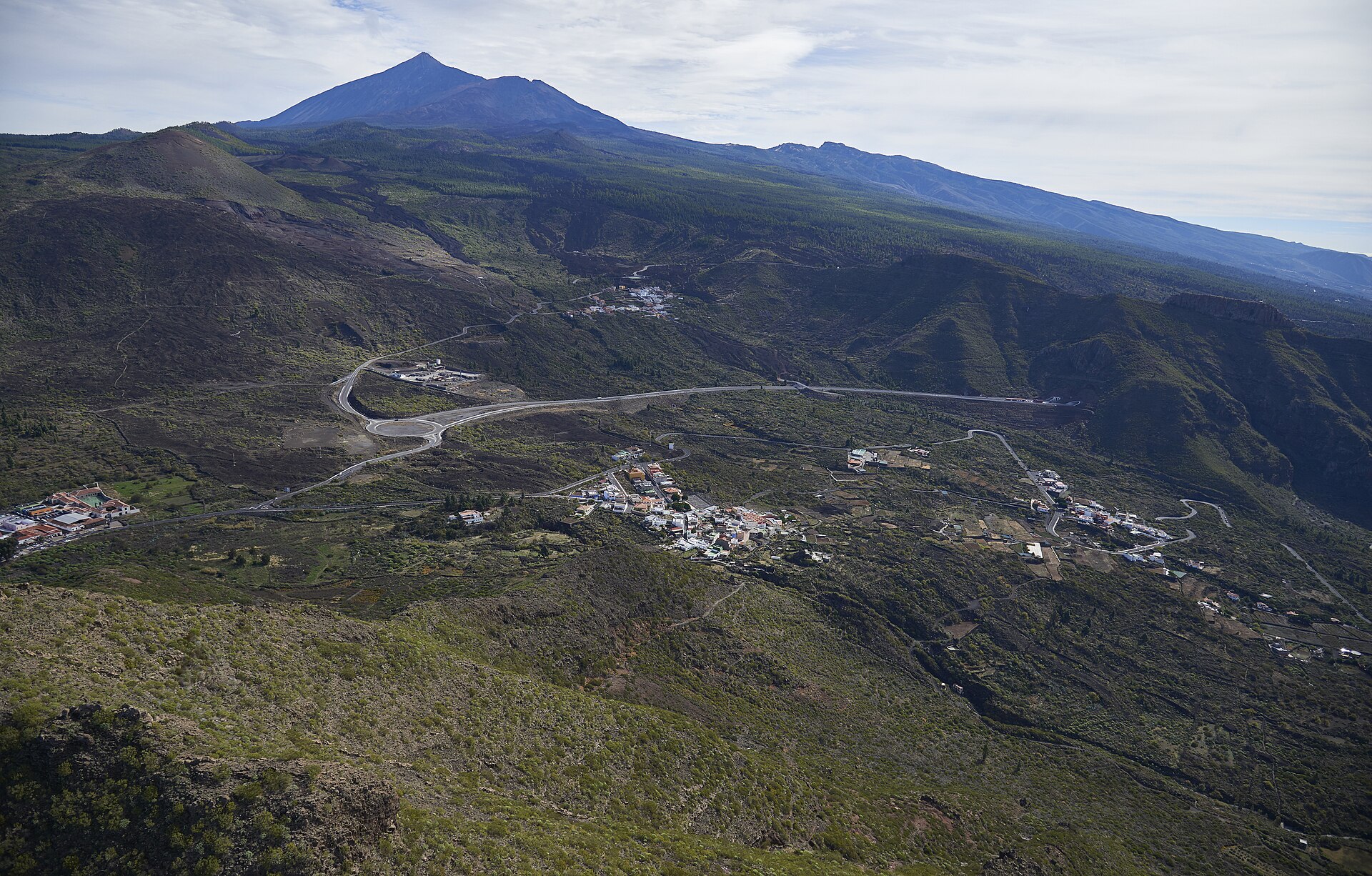
Las Manchas, the village beside the volcano
Las Manchas is a village within the municipality of Santiago del Teide itself, at around 980 metres altitude and about 2 km from the old town, with part of its area inside the reserve’s boundary. It has a parish church (Virgen del Pilar), a cultural centre, sports facilities and a traditional rain-fed farming economy. Its patronal festival, honouring the Virgen del Pilar and Santo Domingo de Guzmán, runs from 7 to 12 October. Together with El Molledo and El Retamar, it forms part of the upper midlands linking the old town with the volcanic landscape.
What to see and hiking trails
The PR-TF 43.3 trail, a circular route around the Chinyero, starts from the Plaza de Santiago del Teide, covers 6.44 km in around 2 h 30 min at low difficulty, and loops around the main cone through pine forest and lava; see the trail listing. For something longer, you can link up with the PR-TF 43 Garachico-Montaña Chinyero, around 17.7 km. The Arenas Negras recreation area is a good stop to rest or eat halfway through.
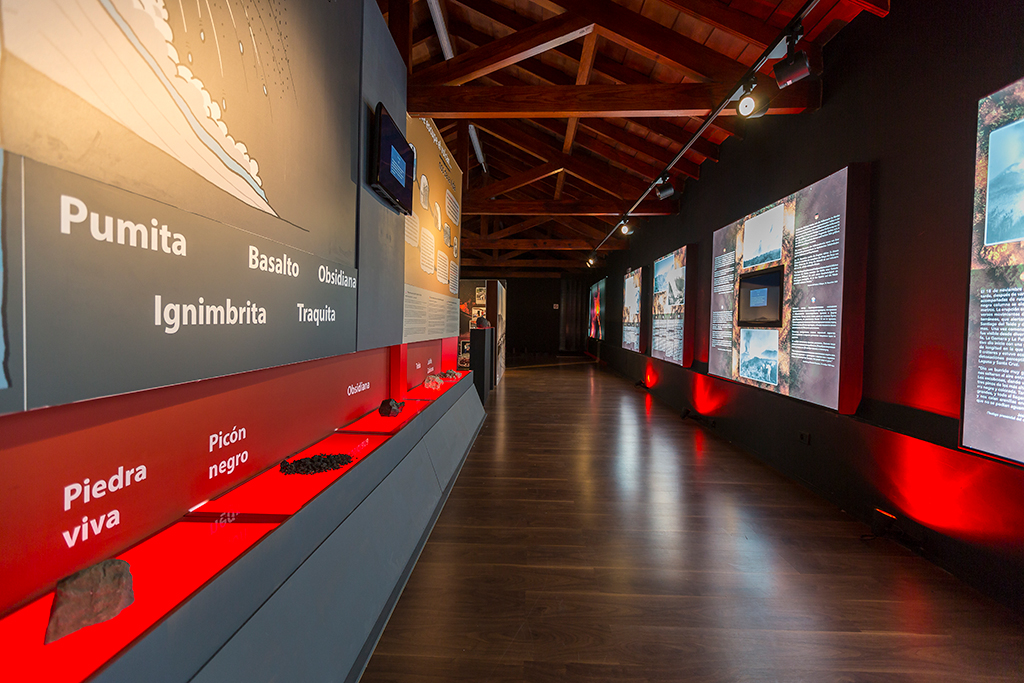
The Chinyero Visitor Centre
The Chinyero Visitor Centre explains the 1909 eruption and the volcanology of Tenerife through multimedia displays, before you head out to walk the protected area. The municipal tourism website states the centre is temporarily closed for improvements to its electrical installation: confirm it has reopened on the centre’s listing before planning the trip.
Best time to visit
The trail has almost no shade, so November to May, with milder temperatures, is the most comfortable season; in summer it is best to avoid the middle of the day because of sun exposure. Otherwise there is no official closed season, though it is worth checking the weather before heading up.
How to get there, and its link to the old town
The Chinyero is walked from the Plaza de Santiago del Teide, a few minutes’ drive from the municipality’s old town, with which it shares much of its volcanic identity: the old town guide already mentions the Chinyero as its great inland landscape, and this page expands on that with the eruption, the reserve, Las Manchas and the trails only summarised there. It is reached via the TF-375 and the midlands road network; see our guide on how to get to Santiago del Teide for bus lines and parking.
A half-day itinerary around the Chinyero
Start at the old town square
Set off from the Plaza de Santiago del Teide, the starting point of the PR-TF 43.3.
Walk the circular trail
Cover the 6.44 km trail through pine forest and lava, stopping at the Arenas Negras recreation area.
Pass through Las Manchas
Head over to the village and El Calvario, where tradition places the end of the 1909 lava flow.
Close with the Visitor Centre
If it has reopened, round off the visit with its displays on the eruption and the island’s volcanology.
Frequently asked questions
When did the Chinyero erupt?
On 18 November 1909, for around nine days. It is the most recent eruption recorded on the island of Tenerife.
Which municipalities does the Chinyero Nature Reserve belong to?
It spans Santiago del Teide, El Tanque and Garachico, not only our municipality.
Is the Chinyero Visitor Centre open?
The municipal tourism website lists it as temporarily closed for improvements to its electrical installation. Confirm it has reopened before visiting.
Is the Chinyero trail difficult?
The PR-TF 43.3 is a circular route of low difficulty, 6.44 km and around 2 h 30 min, though with little shade.
What is Las Manchas’ connection to the volcano?
It is the village of Santiago del Teide closest to the reserve; tradition places the spot where the 1909 lava stopped, El Calvario, there.